


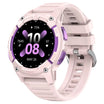


Stainless steel feels better for users who want a smartwatch to look and feel closer to a traditional watch, while Armor Aluminum feels better for users who want a watch that feels lighter and less noticeable on the wrist. The real choice is not about which material sounds better on paper. It is about what kind of ownership experience is desired every day.
Stainless Steel Smartwatch vs Armor Aluminum Smartwatch
This table helps separate two very different strengths. Stainless steel is usually chosen for how it feels as an object, while Armor Aluminum is usually chosen for how it behaves during daily wear.
| Comparison Point | Stainless Steel Smartwatch | Armor Aluminum Smartwatch |
|---|---|---|
| First Impression | More solid and watch-like | Lighter and more device-like |
| Case Feel | Denser and heavier | Lighter and easier to wear |
| Visual Style | More classic and polished | More modern and sporty |
| Wear Over Time | Often feels more substantial | Often feels less demanding |
| Scratch Appearance | Usually looks more natural after light wear | Finish matters more after visible marks |
| Best Match | Style-focused daily wear | Active and casual daily wear |
| Main Reason to Choose | Better watch character | Better wearing ease |
Also read: Titanium vs Stainless Steel Watch: Which One Should You Choose?
Stainless Steel: Designed for the Style-Conscious and Professional Lifestyle
Stainless steel is the optimal choice for users seeking to avoid a smartwatch that feels like a basic electronic device. It resolves the common frustration of wearing a lightweight device by delivering the substantial mass, structural durability, and polished aesthetics expected from a traditional mechanical timepiece.
- Suits Formal Settings: A polished steel case seamlessly matches professional or formal environments. It coordinates well with premium leather or metal link bands, avoiding the appearance of fitness gear in office settings.
- Withstands Hard Impacts: Highly resilient against deep dents and structural damage. Stainless steel offers superior protection for internal components against accidental hard strikes on desks or doorframes.
- Repairable Surface: Unlike coated metals, uncoated silver stainless steel can be manually polished with a standard metal cloth to remove micro-scratches. This addresses the concern of permanent cosmetic wear and extends the visual lifespan of the device.

Armor Aluminum: Built for the Active, Health-First Lifestyle
Armor Aluminum is engineered for users whose main concerns are wrist fatigue, sleep discomfort, or device movement during workouts. It addresses the issue of heavy accessories by prioritizing a low-weight, comfortable experience designed specifically for continuous 24/7 health and activity tracking.
- Eliminates Workout Distractions: The low-mass case prevents the watch from sliding or bouncing during running, weightlifting, or high-intensity training.
- Enables Comfortable Sleep Tracking: Addresses the discomfort of wearing a heavy object to bed. The minimal weight of Armor Aluminum makes overnight sleep and recovery monitoring significantly easier to tolerate.
- Reduces Daily Wrist Fatigue: The lighter material prevents the wrist strain that heavier steel cases often cause after extended hours of typing or continuous daily wear.
- Low-Maintenance Daily Use: The matte finish effectively hides fingerprints and smudges. It functions as a durable daily health tool that pairs naturally with sweat-resistant silicone bands, requiring less attention to cosmetic upkeep.
Scratch Resistance and Daily Wear: Which Smartwatch Material Ages Better?
The scratch question matters because buyers care about how the watch will look after real use, not just on day one. A smartwatch does not need to stay perfect forever, but it does need to age in a way that still feels acceptable to the wearer. That is why consumers usually react to visible wear, not only to the idea of raw durability.
This is where material and finish start to matter together. Stainless steel often looks more natural after light wear because small marks can blend into the surface.
Crucially, uncoated silver stainless steel can often be easily buffed with a polishing cloth to remove micro-scratches.
Armor Aluminum is highly durable, but the look of wear often depends entirely on the coating. Once the anodized aluminum layer gets a deep scratch, the raw silver metal underneath is exposed, and this cannot be polished or repaired. On darker aluminum finishes, these scratches draw more attention because the contrast is harsh.
- Polishing Potential: Uncoated silver stainless steel can often be buffed to remove minor scratches.
- Natural Patina: Stainless steel generally looks more "normal" after small daily marks.
- Anodized Limitations: Armor Aluminum scratches cannot be buffed out; the coating damage is permanent.
- Color Contrast: Visible contrast on dark aluminum often bothers wearers more than the scratch itself.
- Long-Term Looks: Long-term appearance matters as much as raw durability claims on a spec sheet.
Case Size, Finish, and Color Matter as Much as Material
Material alone does not decide whether a smartwatch feels right. A large steel watch can feel annoyingly bulky even when the material itself feels premium. A smaller aluminum watch can feel much better on the wrist simply because the fit is cleaner and more ergonomic. That is why many buyers make a mistake when they judge the material first and the case size second.
Finish and color also change the experience more than expected. Brushed metal, polished metal, matte coatings, and darker case colors all shape how the watch looks in daily light and how easily signs of wear show up. A well-sized watch with an acceptable finish often feels like the better choice, even when the material sounds less premium at first.
How to Choose a Stainless Steel Smartwatch or Armor Aluminum Smartwatch
The simplest way to choose is to evaluate what would cause more frustration after a month of use. Some buyers are bothered by a watch that feels too light or toy-like, while others are bothered by a watch that feels too heavy during continuous wear.
- Prioritizing a Real-Watch Feel: Stainless steel is ideal when seeking a device that feels more like a traditional timepiece.
- Prioritizing Comfort: Armor Aluminum is better for a device that feels effortless and lighter on the wrist.
- Focusing on Appearance: Stainless steel is recommended when visual presence and style are the main priorities.
- Focusing on Movement: Armor Aluminum suits long, continuous wear and active fitness routines perfectly.
- Considering Dimensions: Case size should always be evaluated before judging the material alone.
- Thinking About Aging: Finish and color indicate how the watch will age over time and should factor into the final decision.
Conclusion
A stainless steel smartwatch is the better choice for buyers who want stronger watch character, more visual confidence, and a case that feels closer to a traditional timepiece. An Armor Aluminum smartwatch is the better choice for buyers who want lower wrist burden, easier long wear, and a more effortless fit in an active daily life.
FAQs
Is stainless steel better than Armor Aluminum for a smartwatch?
Stainless steel is better for a premium feel and classic watch style. Armor Aluminum is better for lightweight daily wear, fitness tracking, and sleeping.
Does stainless steel scratch less than Armor Aluminum?
Not always. The bigger difference is how the scratches look. Silver stainless steel can often be polished to remove micro-scratches, whereas a deep scratch on anodized Armor Aluminum is permanent and more visible, especially on darker colors.
Which smartwatch material is better for everyday use?
That depends entirely on daily routines. Stainless steel suits style-focused wear and office settings better, while Armor Aluminum is ideal for 24/7 wear, workouts, and active use.


Leave a comment
All comments are moderated before being published.
This site is protected by hCaptcha and the hCaptcha Privacy Policy and Terms of Service apply.